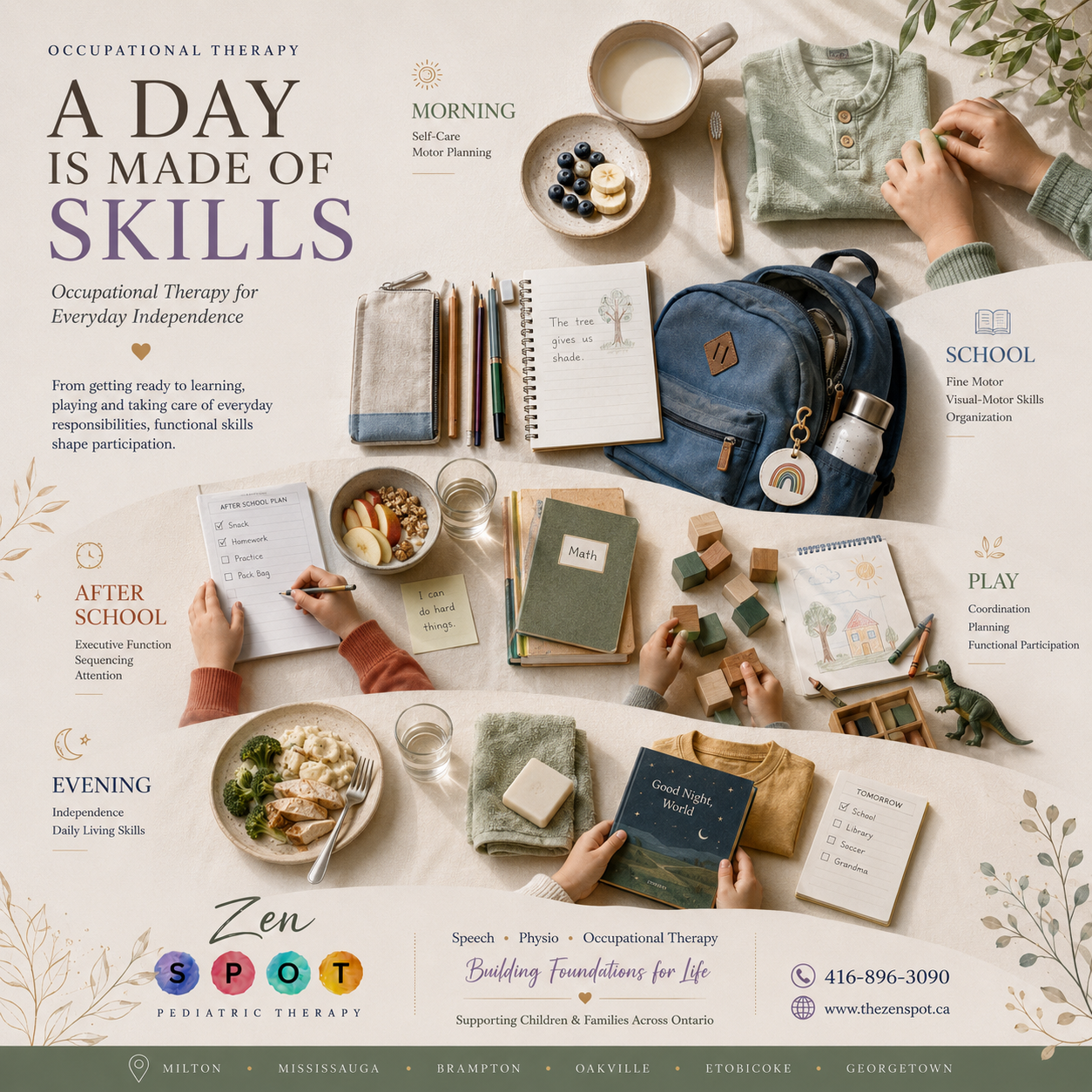
Pediatric Occupational Therapy for Everyday Skills | Zen S.P.O.T. : Discover how Pediatric Occupational Therapy supports fine motor skills, self-care, executive function, sensory processing, handwriting and participation for children in Ontario. A Day Is Made of Skills Getting dressed. Picking up a pencil. Organizing a backpack. Following a morning routine. Eating independently. Playing with others. Preparing for tomorrow. These activities can appear simple from the outside. For a child, however, everyday routines can involve a complex combination of fine motor coordination, motor planning, executive function, sensory processing, attention and problem-solving. The ability to participate in everyday life is built from many individual skills working together. This is where Pediatric Occupational Therapy can play an important role. At Zen S.P.O.T. Pediatric Therapy, our Occupational Therapy approach focuses on helping children develop practical skills that support participation in the environments that matter most: home, school, play and community life. The objective is not simply to complete an activity during a therapy session. The objective is to help skills become useful in everyday life. What Is Pediatric Occupational Therapy? Pediatric Occupational Therapy supports children as they develop skills needed for everyday activities and participation. For children, their “occupations” can include many ordinary parts of childhood: These activities require different developmental abilities. A child may need fine motor coordination to manage clothing fasteners, visual-motor skills to write, executive function to organize a backpack, or sensory processing skills to remain engaged during a busy classroom routine. Pediatric Occupational Therapy can help identify the skills involved and develop individualized strategies around a child’s needs and goals. Fine Motor Skills: The Small Movements Behind Big Tasks Many everyday activities depend on precise hand and finger movements. Fine motor skills contribute to activities such as: For a child, difficulty with fine motor coordination can make otherwise routine activities more challenging. Occupational Therapy may incorporate purposeful activities that support hand use, coordination and functional participation. The emphasis remains on connecting developing skills with activities that matter to the child. Handwriting and Visual-Motor Skills Handwriting involves more than putting letters on paper. Children may need to coordinate visual information with hand movements while also managing attention, motor control and the organization of written work. Visual-motor skills can contribute to activities involving: Pediatric Occupational Therapy can address handwriting and visual-motor skills as part of an individualized approach to school participation. The broader goal is to help children participate more effectively in meaningful learning activities. Executive Function and Organization A child’s ability to complete a routine can involve more than physical skills. Executive function includes mental processes that help children manage tasks, organize information and respond to changing demands. Everyday examples can include: Consider the simple task of preparing a school backpack. A child may need to remember what belongs inside, locate the correct items, organize them, follow a sequence and prepare for the next day. Occupational Therapy can incorporate strategies and activities designed around these functional challenges. This creates an important connection between executive function and everyday independence. Self-Care and Daily Living Skills Independence often develops through ordinary routines. Getting dressed. Eating. Managing personal belongings. Preparing for school. Following a morning routine. These activities can involve several developmental skills simultaneously. Pediatric Occupational Therapy may support children as they work toward greater participation in self-care and daily living activities. Depending on the child’s individual needs, therapy goals may relate to: The goal is not perfection. The goal is to help children develop practical skills that allow them to participate more independently in everyday routines. Motor Planning and Coordination Children constantly encounter activities that require them to figure out how their body should move to complete a task. This can involve motor planning and coordination. For example, getting dressed requires a child to organize several movements in sequence. Playing may require coordinating hands and eyes. School activities may require a child to manipulate materials while maintaining attention. Occupational Therapy may incorporate activities that encourage children to practise coordination and motor planning within meaningful contexts. This can help connect individual developmental skills with functional participation. Sensory Processing and Regulation Children experience information from their surroundings throughout the day. Sensory processing relates to how children respond to and manage sensory information as they interact with their environment. For some children, sensory experiences may affect their ability to participate in routines, learning activities, play or other everyday experiences. At Zen S.P.O.T., sensory processing and regulation may be addressed as part of an individualized Occupational Therapy approach. The emphasis is on understanding the child’s needs and supporting participation in meaningful environments. Rather than focusing on sensory experiences in isolation, the broader objective is to consider how sensory needs may relate to function, participation and everyday routines. School and Classroom Participation School is one of the most important environments in a child’s everyday life. Children are expected to manage numerous demands throughout the school day. These can include: Occupational Therapy can support skills associated with school and classroom participation when these are relevant to a child’s individualized goals. The focus is on helping children build practical abilities that can support participation in their educational environment. Functional Independence: Turning Skills Into Participation A developmental skill becomes particularly meaningful when a child can use it in everyday life. A child may practise a fine motor activity, but the larger objective could be using those skills to manage classroom materials. A child may work on organization, but the functional outcome may be becoming more independent with a school routine. A child may develop self-care skills, but the meaningful result is greater participation in getting ready for the day. This is the difference between practising a skill and using a skill functionally. At Zen S.P.O.T., our Pediatric Occupational Therapy approach considers how developmental skills connect with participation across home, school, play and community life. Why Individualized Pediatric Occupational Therapy Matters Children do not all experience the same developmental challenges. Two children may struggle with the same everyday activity for completely different reasons. One child may have difficulty with fine motor coordination.