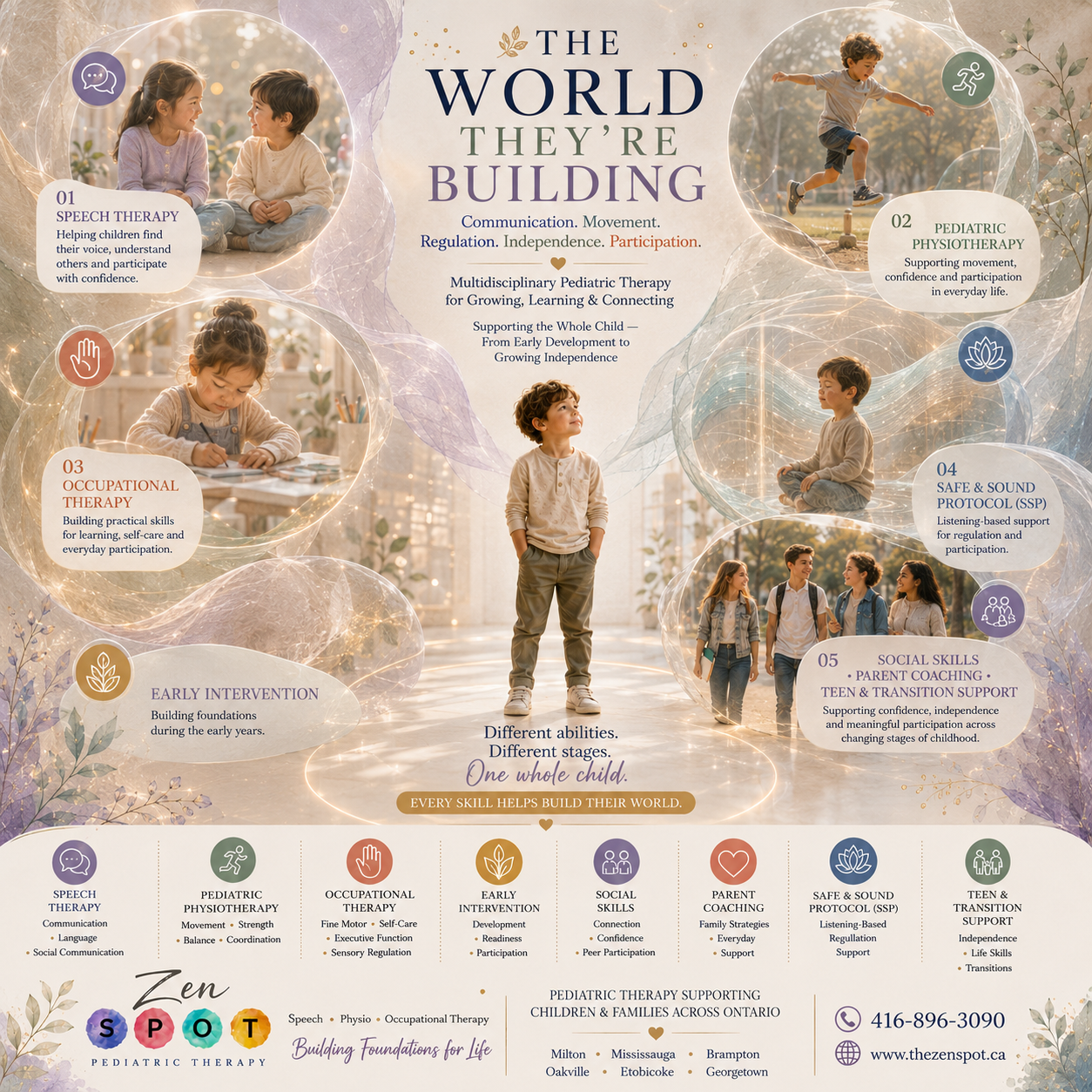
Looking for pediatric therapy in Milton? Zen S.P.O.T. provides Speech, Occupational Therapy, Pediatric Physiotherapy, early intervention & more. Pediatric Therapy in Milton: Supporting the Whole Child Pediatric Therapy Milton | Speech, OT & Physio | Zen S.P.O.T. – Pediatric Therapy in Milton: Supporting the Whole Child Every child develops in their own way. Communication, movement, sensory processing, attention, emotional regulation, independence and social participation are not isolated parts of childhood. They influence how children learn, play, communicate, build relationships and participate in everyday life. For families looking for pediatric therapy in Milton, choosing the right support can therefore involve more than finding a single service. It can mean finding a multidisciplinary pediatric therapy team that understands the child as a whole. At Zen S.P.O.T. Pediatric Therapy, our approach brings together Speech Therapy, Occupational Therapy and Pediatric Physiotherapy, alongside developmental and participation-focused supports designed around each child’s individual needs and goals. Our philosophy is simple: Different abilities. Different stages. One whole child. What Is Pediatric Therapy? Pediatric therapy supports children as they develop the functional skills they need for everyday participation. Depending on a child’s individual profile, support may focus on areas such as: The purpose is not to make every child develop in exactly the same way. Instead, pediatric therapy can help children build skills, strategies and confidence that support meaningful participation in their own lives. At Zen S.P.O.T., this means looking beyond a single difficulty and considering how different developmental areas may interact. Speech Therapy for Communication and Connection Communication is fundamental to participation. For some children, communication development may involve challenges with speech sounds, language, vocabulary, sentence formation, understanding, social communication or expressing ideas. Pediatric Speech Therapy can support children as they develop functional communication skills that matter in everyday environments. This can include communication for: For families searching for Speech Therapy in Milton or Mississauga, an individualized approach can help connect therapy goals with real-world situations rather than focusing only on isolated exercises. Communication is not simply about speaking. It is about being understood, understanding others and having meaningful opportunities to connect. Occupational Therapy for Everyday Independence Occupational Therapy focuses on meaningful everyday activities. For children, these activities may include dressing, eating, writing, playing, organizing school materials, participating in routines and managing age-appropriate self-care tasks. Pediatric Occupational Therapy may address areas including: For families looking for Occupational Therapy in Milton or Oakville, the emphasis should be on how developing skills can translate into meaningful participation outside the therapy environment. A skill becomes particularly valuable when a child can use it in everyday life. Pediatric Physiotherapy for Movement and Confidence Movement provides children with opportunities to explore their environment, participate in play and develop physical confidence. Pediatric Physiotherapy may support children working toward improved: Depending on the child’s developmental stage and individual goals, therapy may relate to activities such as sitting, crawling, standing, walking, running, jumping, climbing or participating in play. For families searching for Pediatric Physiotherapy in Milton or Brampton, individualized movement support can help connect developmental goals with the activities that matter to the child and family. The goal is not simply movement for movement’s sake. It is movement that helps children participate. Early Intervention and Child Development Early development provides important opportunities to identify areas where a child may benefit from additional support. Early Intervention can be relevant when families have questions about communication, movement, sensory experiences, social participation, developmental milestones or everyday functioning. Early support can help families better understand a child’s strengths and areas requiring additional attention while creating opportunities to develop functional skills. At Zen S.P.O.T., early intervention is viewed within the broader context of childhood development and family priorities. For families across Milton, Mississauga, Brampton, Oakville, Etobicoke and Georgetown, the objective is to create individualized support that fits into real family life. Supporting Sensory Regulation and Participation A child’s sensory experiences can influence how comfortably they participate in everyday environments. Noise, movement, transitions, visual stimulation, touch and changing demands can sometimes make particular environments challenging. Sensory regulation support may help families and children explore strategies for navigating these experiences. At Zen S.P.O.T., sensory considerations may be incorporated into individualized therapeutic planning, particularly when sensory experiences influence: The objective is not to eliminate every challenging sensory experience. It is to help create appropriate strategies and supportive conditions for participation. Safe and Sound Protocol (SSP) Zen S.P.O.T. also offers the Safe and Sound Protocol (SSP) as a listening-based intervention that may be incorporated into an individualized therapeutic approach when appropriate. SSP is associated with listening-based support focused on nervous-system regulation and readiness for engagement. At Zen S.P.O.T., SSP should be considered within the context of the individual child or family’s goals rather than as a standalone solution or guaranteed outcome. A multidisciplinary perspective can be particularly valuable when regulation interacts with communication, sensory processing, attention, social participation or everyday routines. Families interested in SSP can discuss whether it may be an appropriate component of their individualized support plan. Social Skills and Peer Participation Childhood is also about relationships. Playing with peers, joining group activities, participating in conversations and navigating social situations are important parts of everyday development. Social skills support may focus on areas such as: The objective is not to make children behave according to a single social template. Instead, support can focus on helping children develop meaningful ways to connect, communicate and participate as themselves. Parent Coaching and Family-Centred Support Children do not develop in isolation. Parents and caregivers are often central to understanding a child’s strengths, challenges, routines and priorities. Parent coaching can help families explore practical strategies that may be incorporated into everyday situations. This may include support around: The most meaningful progress often needs to make sense beyond scheduled therapy sessions. That is why family involvement can be an important component of a comprehensive pediatric therapy approach. Teen and Transition Support Development does not stop when children become teenagers. As children grow, priorities can change. Teen and transition support may focus on: A strong pediatric therapy model