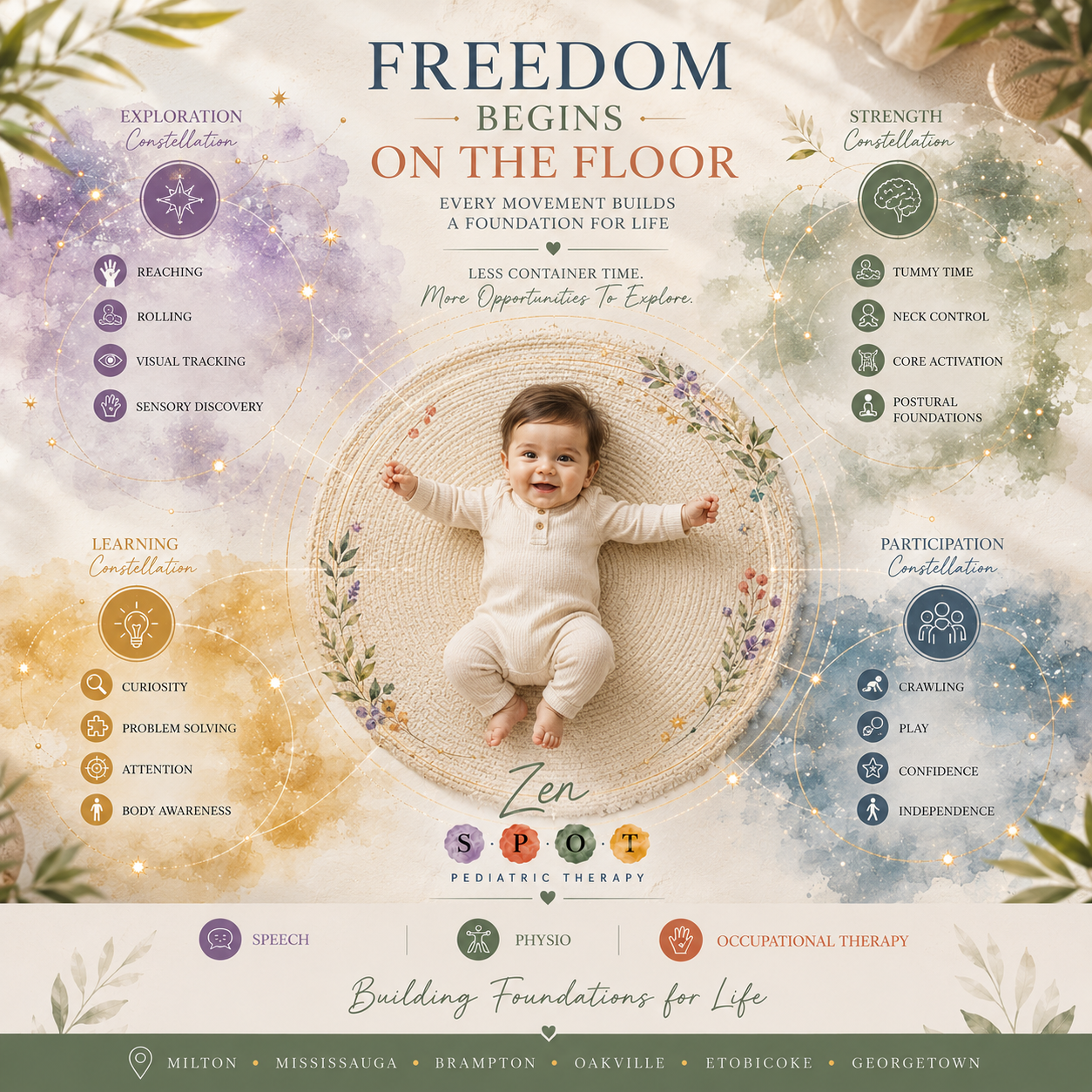
Freedom to Move | Infant Development Guide | Zen S.P.O.T Pediatric Therapy : Freedom to Move: Why Natural Movement Is the Foundation of Healthy Infant Development Modern Parenting and the Rise of Container Culture Parents today have access to more baby products than ever before. Swings, loungers, bouncers, molded seats, activity centers, walkers, and high-tech infant gear promise convenience and developmental benefits. While many of these products can be helpful in moderation, research continues to emphasize one important principle: Babies develop through movement. The first year of life lays the foundation for strength, coordination, balance, sensory processing, motor planning, and future participation in everyday activities. Why Floor Time Matters Floor time provides infants with opportunities to: Unlike containers that restrict movement, floor play allows babies to learn through exploration. At Zen S.P.O.T Pediatric Therapy, we often remind families that movement is one of a child’s earliest teachers. The Benefits of Tummy Time Tummy time remains one of the most important developmental activities during infancy. Benefits include: Neck Strength Development Tummy time strengthens muscles responsible for head control and postural stability. Core Activation Strong abdominal and trunk muscles provide the foundation for future movement skills. Motor Skill Development Rolling, crawling, sitting, and walking all begin with foundational strength developed during tummy time. Flat Head Prevention Tummy time reduces pressure on the back of the skull and supports healthy head shape development. Understanding Container Time Containers include: These products can be useful tools but should not become a baby’s primary environment. Excessive container use may contribute to: Flat Head Prevention and Healthy Positioning Positional plagiocephaly, often called flat head syndrome, has become increasingly common. Fortunately, prevention strategies are simple: Safe sleep should always remain the priority. Babywearing as a Developmental Tool Babywearing offers several developmental benefits: Babywearing should complement, not replace, opportunities for independent floor exploration. Walking Development: Why Barefoot Is Often Best One of the biggest misconceptions is that babies need supportive shoes to learn how to walk. Research suggests that barefoot exploration often provides the best sensory feedback and movement opportunities. When shoes are required, look for: The Truth About Baby Walkers Many parents believe walkers help babies walk sooner. Research suggests otherwise. Traditional walkers may: Push walkers and natural exploration opportunities are generally preferred. Choosing Development-Friendly Toys The best toys often support: Open-ended toys such as blocks, balls, stacking cups, pretend play items, and books often provide greater developmental value than highly stimulating electronic toys. When Should Parents Seek Professional Advice? Consider consulting a pediatric therapist if your child demonstrates: Early support often leads to the best outcomes. Building Foundations for Life Healthy development is not about expensive equipment or achieving milestones quickly. It is about providing opportunities for movement, exploration, interaction, and learning. At Zen S.P.O.T Pediatric Therapy, our team of Pediatric Physiotherapists, Occupational Therapists, and Speech-Language Pathologists helps families support development through evidence-based, child-centered care. Because every child deserves the opportunity to build strong foundations for confidence, participation, and lifelong success. Speech • Physio • Occupational TherapyBuilding Foundations for LifeServing Milton, Mississauga, Brampton, Oakville, Etobicoke & Georgetown Schedule a Free Consultation
What to Expect During SSP Sessions | Safe & Sound Protocol | Zen S.P.O.T
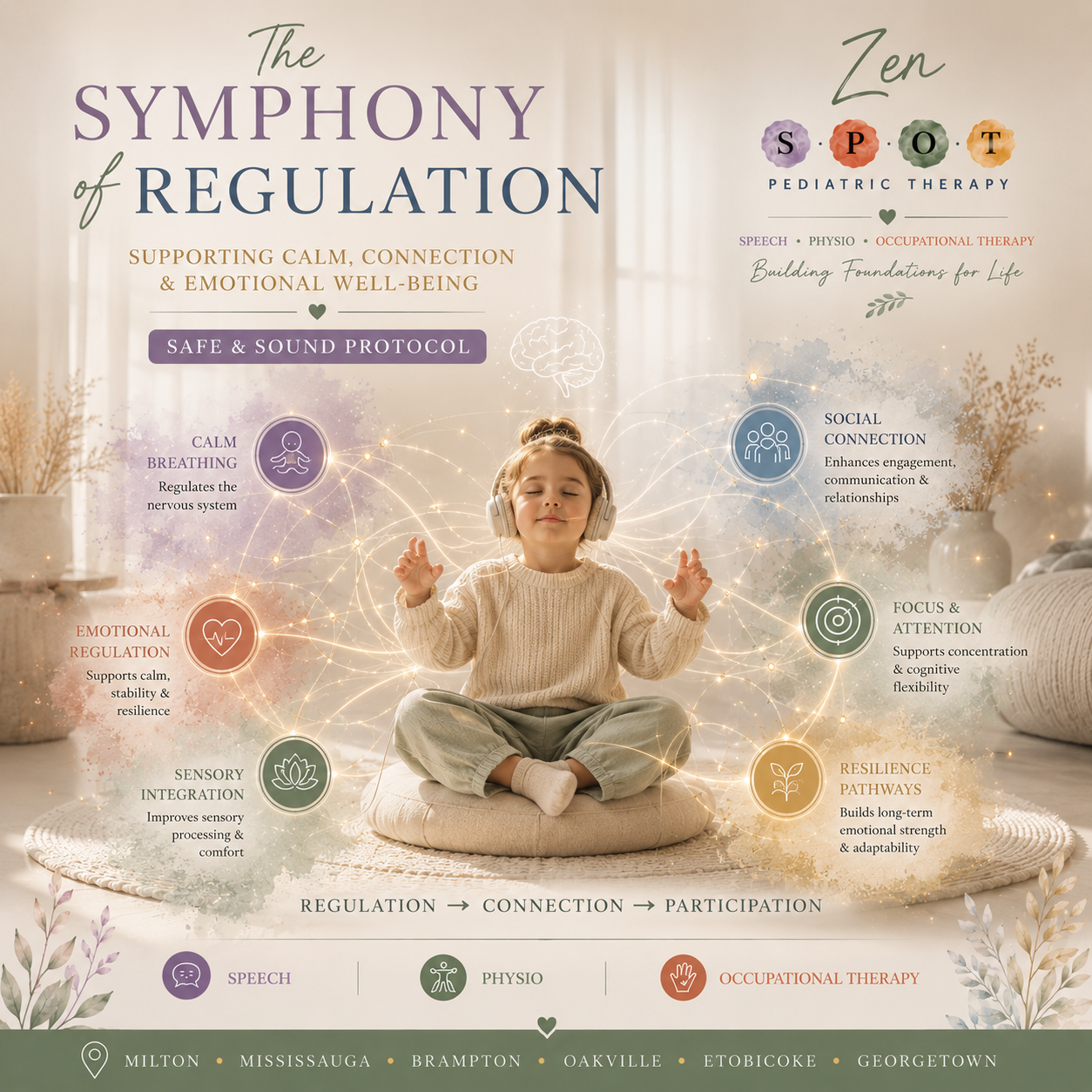
What to Expect During SSP Sessions | Safe & Sound Protocol | Zen S.P.O.T What to Expect During Safe & Sound Protocol (SSP) Sessions The Safe & Sound Protocol (SSP) is an evidence-based listening intervention designed to support nervous system regulation, emotional resilience, sensory processing, and social connection. Developed by Dr. Stephen Porges and grounded in Polyvagal Theory, SSP uses specially filtered music to help the brain and body recognize cues of safety, supporting a greater sense of calm, regulation, and connection. One of the most common questions families ask is: “What actually happens during an SSP session?” At Zen S.P.O.T Pediatric Therapy, SSP is delivered through a personalized, trauma-informed approach that respects the unique needs and experiences of every individual. Understanding the Safe & Sound Protocol The SSP is not simply a music program. It is a structured therapeutic intervention that uses specially filtered music designed to engage neural pathways associated with listening, social engagement, emotional regulation, and nervous system functioning. The goal is not to force change but to support the nervous system’s capacity for regulation, flexibility, and connection. Step 1: Initial Assessment and Preparation Every SSP journey begins with an intake process. During this stage, we gather information about: This information helps us determine the most appropriate pacing and support strategies throughout the process. Because every nervous system is different, personalization is a critical component of successful SSP implementation. Step 2: Guided Listening Sessions The core SSP program consists of approximately five hours of specially filtered music delivered over time. Listening sessions are carefully monitored and adjusted based on the individual’s responses. The goal is to support regulation rather than overwhelm the nervous system. Sessions may be modified through: This flexibility helps create a supportive therapeutic experience that respects the individual’s comfort level and regulation capacity. Step 3: Regulation and Integration Support Listening is only one part of the process. At Zen S.P.O.T, we emphasize integration and nervous system support throughout the SSP journey. This may include: Integration helps individuals transfer regulation skills into everyday life situations. Who May Benefit from SSP? The Safe & Sound Protocol may be considered for individuals experiencing: Suitability should always be determined through individualized assessment and professional guidance. A Trauma-Informed Approach Matters At Zen S.P.O.T Pediatric Therapy, we recognize that healing occurs within a sense of safety. Our trauma-informed approach prioritizes: The goal is to create an environment where clients feel supported, understood, and empowered throughout the process. Integrating SSP with Other Supports The Safe & Sound Protocol can complement a variety of therapeutic approaches, including: An integrated approach often helps individuals build lasting skills that support daily participation and well-being. Why Families Choose Zen S.P.O.T for SSP Families often seek SSP because they are looking for support that goes beyond symptom management. They want tools that help improve regulation, connection, resilience, and participation in everyday life. Our team provides a personalized, compassionate, and evidence-informed approach designed to meet individuals where they are and support meaningful progress over time. Because every nervous system deserves the opportunity to experience greater calm, connection, and flexibility. Speech • Physio • Occupational Therapy Building Foundations for Life Schedule a Free Consultation Read our Blogs and Articles