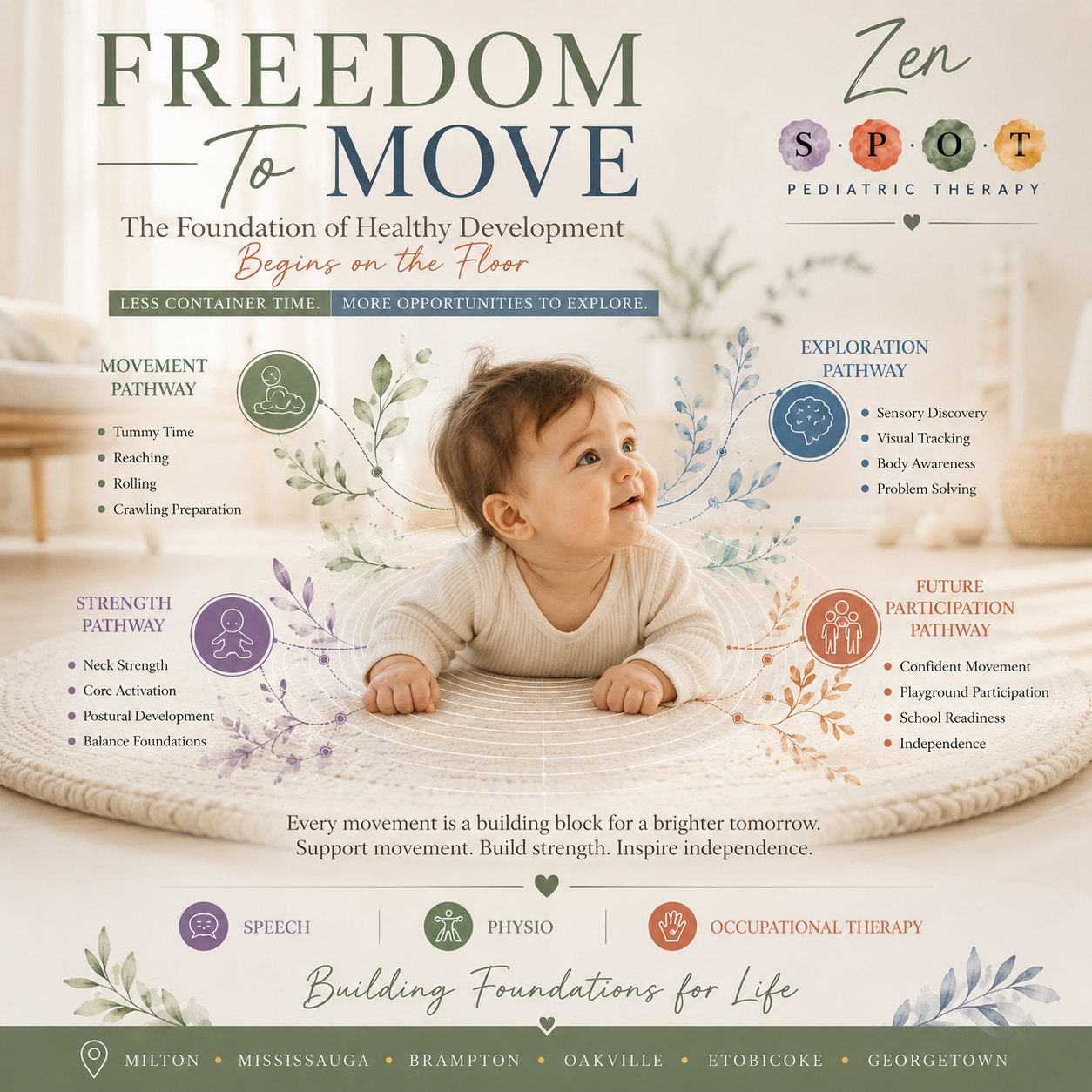
Container Time vs Floor Time | Infant Development Tips | Zen S.P.O.T Learn how tummy time, floor play, and free movement support infant development. Discover the impact of container overuse and how to encourage healthy motor milestones. Container Time vs Floor Time: Why Movement Matters for Infant Development Modern parenting comes with no shortage of baby products designed to make life easier. Swings, bouncers, infant seats, loungers, jumpers, and activity centers are marketed as convenient tools for soothing, entertaining, and supporting babies during the first year of life. While these products can certainly have a place in everyday family life, pediatric professionals are increasingly raising awareness about an important developmental concept: babies learn through movement. At Zen S.P.O.T Pediatric Therapy, we frequently talk with families about the balance between convenience and development. The goal is not to eliminate baby gear entirely. Instead, it is to ensure that infants have enough opportunities to move, explore, and interact with their environment naturally. What Is Container Time? Container time refers to any period when a baby is placed in equipment that restricts movement and holds them in a fixed position. Examples include: These tools are often useful for short periods and can help caregivers manage daily routines safely. Problems typically arise when containers become a baby’s primary environment rather than a temporary support. Why Movement Matters Movement is one of the primary ways infants learn about themselves and the world around them. Through movement, babies develop: These foundations support future developmental milestones including sitting, crawling, standing, walking, and participation in everyday activities. The Benefits of Floor Time Floor time allows babies to move freely and practice important developmental skills. Benefits include: Improved Gross Motor Development Floor play encourages rolling, reaching, pivoting, crawling, and weight shifting. Better Core Strength Natural movement challenges the muscles of the neck, trunk, shoulders, and hips. Enhanced Sensory Exploration Babies learn through touch, movement, visual exploration, and interaction with their environment. Stronger Problem-Solving Skills Movement encourages curiosity, exploration, and learning. Reduced Risk of Flat Head Syndrome Changing positions regularly helps reduce prolonged pressure on the back of the head. The Connection Between Container Overuse and Development Research and clinical experience increasingly suggest that prolonged container use may contribute to: This does not mean containers are harmful when used appropriately. Rather, balance is important. Tummy Time: The Developmental Gold Standard Tummy time remains one of the most effective ways to support infant development. Benefits include: Parents often find success by incorporating short, frequent tummy time sessions throughout the day. Practical Tips for Families Healthy movement habits can be encouraged by: The goal is not perfection but creating opportunities for movement throughout the day. Building Foundations for Life Infant development does not require expensive gadgets or highly structured programs. What babies need most are opportunities to move, explore, interact, and learn through experience. At Zen S.P.O.T Pediatric Therapy, we believe strong foundations are built through movement, connection, and participation. By prioritizing floor time, tummy time, and responsive caregiving, families can support healthy development and lifelong learning. Speech • Physio • Occupational Therapy Building Foundations for Life Schedule a Free Consultation Read more